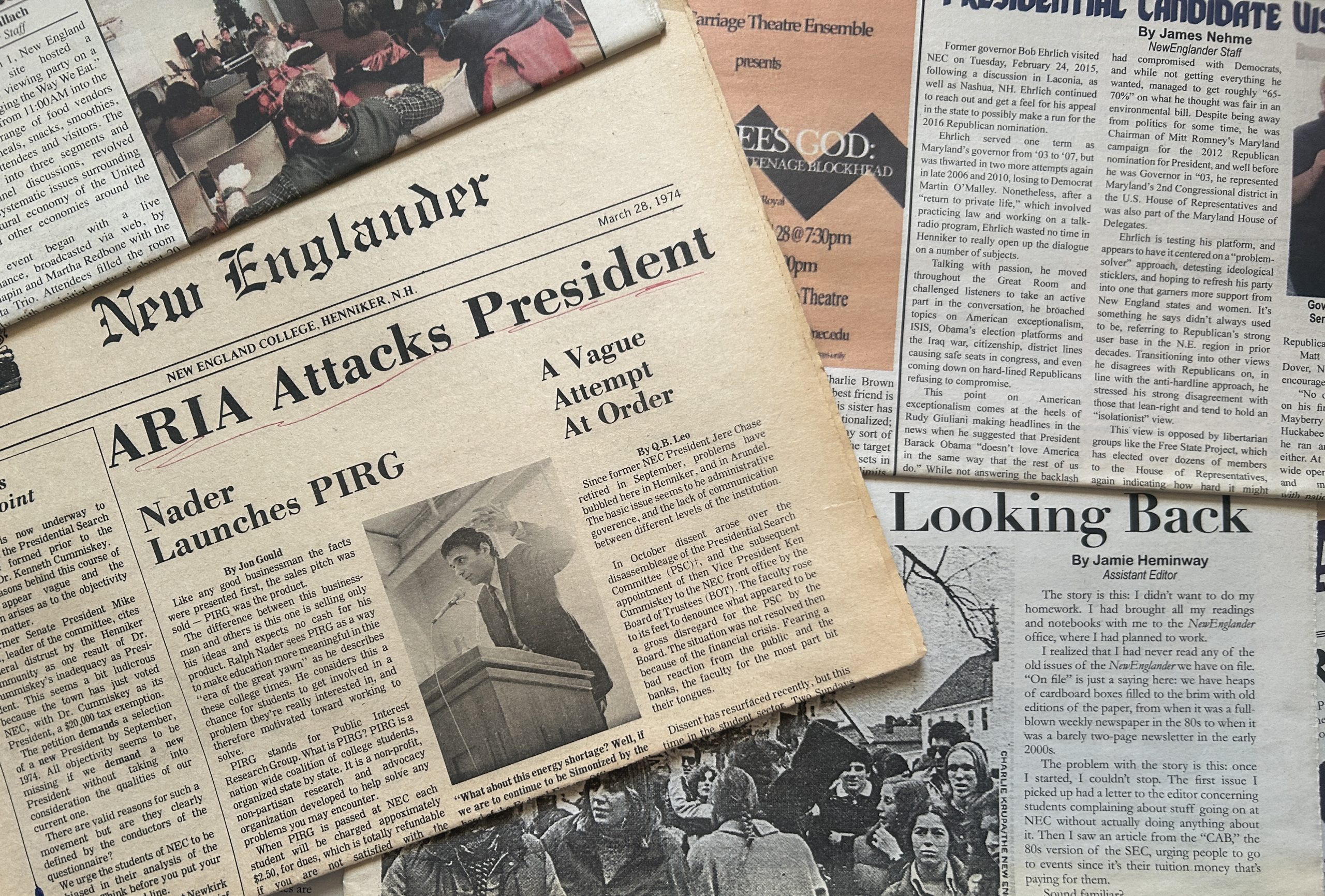

In this series, Tess Anderson looks back on news events impacting the NEC community and provides an update.
*Disclaimer: this story contains sensitive topics including sexual assault.
Archdiocese of Philadelphia Child Sexual Abuse Scandal
In March 2011, the NewEnglander reported on the suspension of 21 Catholic priests in Philadelphia from ministry who were involved in child sexual abuse accusations. The suspension was a result of a grand jury report that had found the Philadelphia Archdiocese guilty of covering up decades long accusations of child sexual abuse. Despite credible accusations made against them, 37 priests were still active in clergy work.
The 2011 grand jury report was the third of its kind in Philadelphia, with grand juries in 2003 and 2005. Due to the magnitude of the abuse, the 2003 grand jury recommended that the following grand jury continue investigating the abuse. Neither of the earlier reports was able to indict those that they deemed were guilty of sexual abuse crimes because of the Pennsylvania statute of limitations. It was not until the 2011 grand jury trial that led to the prosecution of a clergyman who was found to have knowingly covered up the sexual abuse. All the offending priests that they had considerable evidence against were saved from prosecution.
The 2003 and 2005 grand juries were vocal about their disagreements with the statute of limitations, indicating multiple times that the statute of limitations has prevented many victims from seeing justice against their abusers.
As the 2005 report states, “The abuser priests, by choosing children as targets and trafficking on their trust, were able to prevent or delay reports of their sexual assaults, to the point where applicable statutes of limitations expired. And Archdiocese officials, by burying those reports they did receive and covering up the conduct, similarly managed to outlast any statutes of limitation. As a result, these priests and officials will necessarily escape criminal prosecution. We surely would have charged them if we could have done so.”
Similar sentiments were expressed in the 2003 report, which stated that they were “extremely concerned that the statute of limitations currently in effect may preclude the prosecution of many priests who sexually abused minors as well as those individuals who covered up the crimes and/or allowed them to occur.”
The 2003 grand jury was able to find evidence that “over the past thirty-five years more than 120 priests serving in the Archdiocese of Philadelphia had been accused of sexually abusing hundreds of adolescents and younger children, and that, with rare exceptions, the Archdiocese did not report these accusations to public authorities.” In addition to recommending the subsequent grand jury to continue investigating the abuse, this report also recommended that they “should call to testify Cardinal Anthony J. Bevilacqua and Monsignor William Lynn [the Secretary of Clergy] as often as they find necessary so that they may assess the demeanor and credibility of these and other current and former members of the Archdiocesan management…”
The 2005 report further identified Cardinal Krol, a former cardinal, of behaving “disgracefully in response to the crisis of priest sexual abuse of children.” This report highlighted again how Pennsylvania law made them unable to charge the leaders of the archdiocese.
In 2011, the grand jury was asked to investigate further into the abuse by priests in Archdiocese of Philadelphia because of new information regarding more recent instances of sexual abuse. These two recent instances of sexual abuse had yet to reach the statutes of limitations in Pennsylvania, meaning the priests and officials involved could now be charged for their crimes. For the two new cases that were brought to the grand jury, they were able to charge Father Edward Avery, Bernard Shero, Father James Brennan, and Father Charles Engelhardt with rape and other related offenses. The grand jury was unable to charge Cardinal Bevilacqua.
The grand jury was also able to indict Monsignor William Lynn with the crime of endangering the welfare of a child. Lynn was acutely aware of the abusive priests and their actions, and rather than ensuring these priests did not have access to more children, Lynn had sent these priests to locations where they continued to have access to children.
In June 2012, Monsignor William Lynn was convicted of covering up sexual abuses by priests under his supervision and was the first senior official in the U.S. Roman Catholic Church to be convicted for abuse allegations. However, in 2013, the conviction was overturned by the Pennsylvania Superior Court after Lynn had only served 18 months of his three-to-six-year sentence in prison. Essentially, the court found that Lynn could not be convicted to the child endangerment law in Pennsylvania.
In another change of events, the Pennsylvania Supreme Court in 2015 ruled in favor of the previous 2012 conviction and held that Lynn was guilty of child endangerment.
The Pennsylvania Superior Court then tried to overturn the Supreme Court’s decision, to which the Supreme Court allowed the overturning of Lynn’s conviction, and the new trial was set for 2017. The retrial was then set to start in 2020, but the Covid pandemic halted the court from proceeding. One significant change that occurred before the retrial was that the credibility of one of the two victims that testified in 2011 was called into question.
William Lynn was back in court in 2022, where he pleaded no contest to a misdemeanor charge.
Following the sexual abuse scandal in Philadelphia, a 2018 grand jury investigated child sexual abuse in the remaining six dioceses in Pennsylvania, only excluding Philadelphia and Altoona-Johnstown, as those archdioceses had previously been investigated. The 2018 report found credible allegations against over 300 sexually abusive priests and identified over 1,000 child victims, though the grand jury believes the true number of victims is likely in the thousands. Once again, the grand jury recommended that Pennsylvania change the criminal statute of limitations. The grand jury wrote that “Thanks to a recent amendment, the current law permits victims to come forward until age of 50. That’s better than it was before, but still not good enough; we should just get rid of it.”
As a result of the recommendations made by the 2018 grand jury and the previous sexual abuse reports, Governor Tom Wolf signed an amendment on the statute of limitations for victims of sexual abuse in 2019. The amendment removed the statute of limitations for victims of sexual abuse who pursue criminal charges against their abusers and extended the statute of limitation for victims that file civil lawsuits.
The Archdiocese of Philadelphia’s Independent Reconciliation and Reparations Program reported that they have paid over $78 million to 438 victims of sexual abuse as of 2022.
Theft in Henniker and NEC
Tensions between the town of Henniker and New England College were rising in March 1973 as the theft of signs from construction sites and commercial businesses, as well as the theft of personal property from private homes, was becoming an increasing trend.
New England College campus security had been dealing with an average of around 200 theft cases each semester. Most of these cases involved the theft of college property, but there was also a large portion of these cases that involved private property from the town.
Not only were townspeople and businesses angered that their property was being stolen, but especially the road signs that were stolen on construction sites posed a significant safety threat. Tom Hassler, the Henniker police chief at the time, made statements in the NewEnglander where he emphasized that the stolen construction signs, including stop and no parking signs, were “not just another prank… but a dangerous act which could cause a serious accident.” Hassler also reported that the previous year faced a total of $388, about $2,600 today, worth of highway signs that needed to be replaced.
Pat’s Peak had an important $150 sign, or $1,000 today, stolen from their property, and an object from the Tucker Free Library was also stolen. It was after several days that both Pat’s Peak and the Tucker Free Library were able to get their property back.
The NewEnglander indicated that these incidents were not only angering the townspeople because of their stolen property, but also because some townspeople found that the campus security was not doing enough to punish the thieves and prevent further thefts.
Campus security was much more concerned with ensuring that stolen property was returned to the owners than prosecuting the students. The town had been trying to let NEC take care of its own problems as much as possible, however; Hassler acknowledged that the double standard of the college choosing to focus on recovering stolen property and the town preferring to prosecute was making it very difficult to come to a solution to this ongoing problem.
Some NEC students who were caught stealing were given fines by the college’s judicial court, which could sometimes be higher than the ones given by the town court. It was also mentioned that one student was kicked out of the NEC after having been caught stealing.
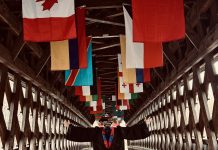
This conflict between Henniker townspeople and New England College even resulted in public opposition by townspeople. According to the NewEnglander, NEC asked for lumber donations when deciding to build the covered bridge (1972), and it was a certain townsperson whom the school asked that refused to donate because he was “one of the people whose barn was ripped apart during the barn board craze.” It was reported that students were allegedly “[ripping] apart” townspeople’s barns.
No further information on the theft crisis nor the “barn board craze” was reported in the March 28, 1974 issue of the NewEnglander.
WNEC Making a Comeback
WNEC was facing no student involvement in the fall of 2014, but with significant efforts by the WNEC chief operator, station manager, and the e-board, they ensured that the radio station would bring in more student involvement and continue the long legacy of WNEC.
When the NewEnglander reported on the new efforts made by WNEC to improve the club, it was March of 2015, and the club had already taken several steps toward their goal. For one, the club started a new radio show that showcased metal music, and they were planning on bringing on new talk shows. WNEC was also considering advertising for other clubs/organizations at NEC.
WNEC was simultaneously taking part in important NEC events. The president of the club was the DJ at the 2015 NEC Takes Over the Peak day and supplied music for the “Experimental Wednesdays.”
These efforts set the groundwork for revitalizing WNEC and student involvement in the club. As mentioned, WNEC has a long tradition at NEC and has been a fundamental club for NEC students since the early 1970s, when the station was founded. Today, WNEC has 6 members and is offered as a course which can be taken for credits.