
In this series, Tess Anderson looks back on news events impacting the NEC community and provides an update.
*Disclaimer: this story contains sensitive topics including sexual assault.
Sean Kingston Performs at NEC
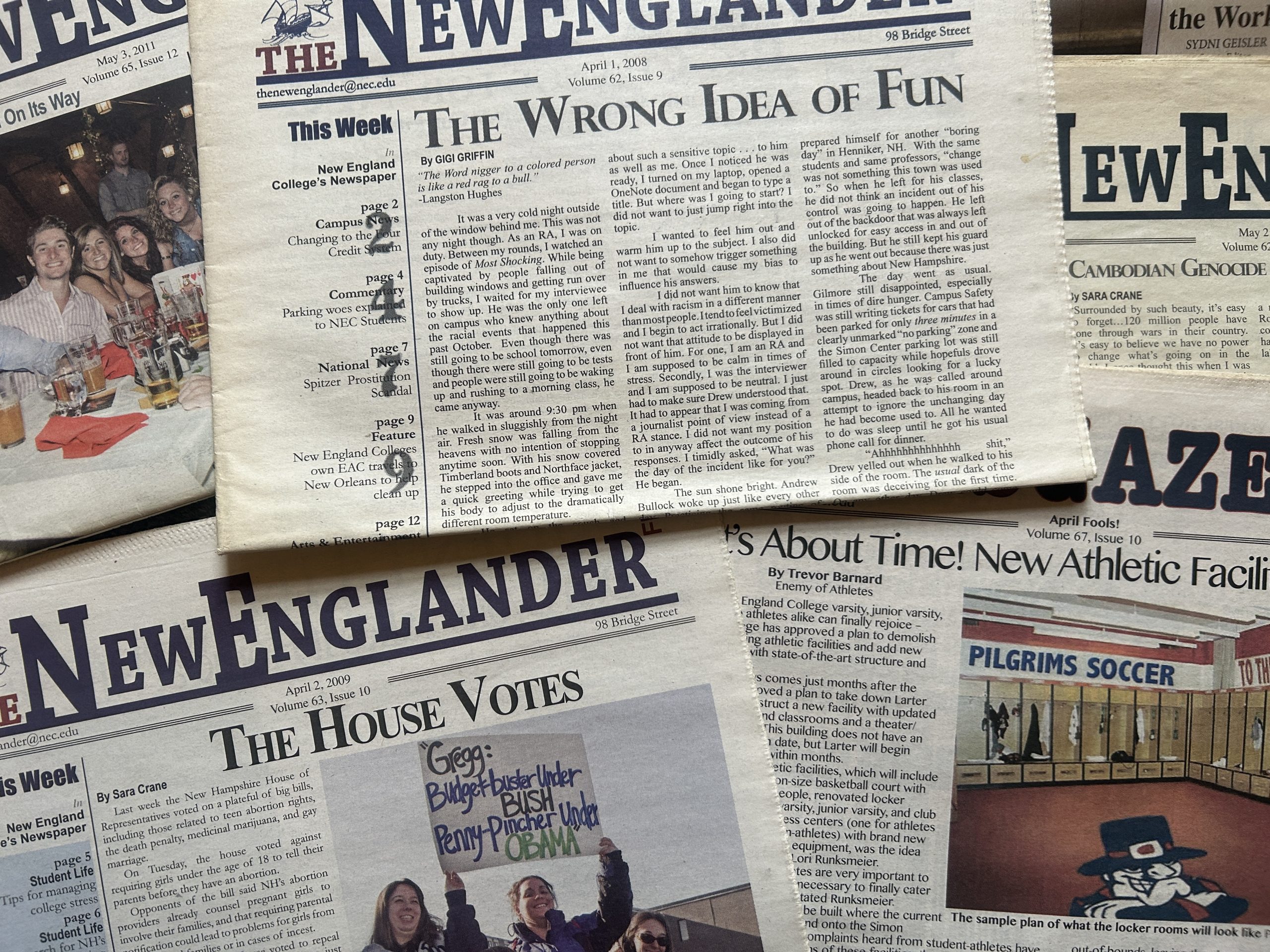
On April 15, 2011, NEC hosted the singer Sean Kingston to perform. The Student Entertainment Committee, equivalent to today’s Office of Student Engagement, spent several months planning the event and was reported to have spent around $20,000 to have him perform. Despite lengthy planning and the substantial amount of money spent, his performance was criticized in the NewEnglander as less than stellar.
An NEC reporter wrote that many students were commenting on how these were more bad than good things to say about his performance. According to the NewEnglander, “his voice was cracking, he repeated a song, he didn’t sing his own music, and there were not many people there.” Not only was his performance reported to have been subpar, but it was also claimed that after his performance he “trolled [the campus] for vulnerable college women.”

Only a few years after Kingston’s visit to NEC and his alleged unsavory conduct on campus, he was accused of sexual assault and facing a $5 million civil lawsuit. The alleged sexual assault occurred in 2010 after Kingston appeared at a Justin Bieber concert. Criminal charges for the assault were said to have been dropped in 2010. Kingston reportedly denied the allegations made and claimed that the sex was consensual. The civil lawsuit was later settled in 2013.
Nothing in the edition of the NewEnglander that addressed Sean Kingston’s visit to NEC mentioned being aware that he had sexual assault allegations. However, several years after the settlement, other colleges across the country that were supposed to host Kingston became aware of his allegations.
In April 2019, The Hawk Newspaper, the student-run newspaper from St. Joseph’s University, reported on Sean Kingston’s allegations just a few days after he performed at the school. The university’s committee that had booked Kingston had learned about the sexual assault allegations a few days before he was set to perform. The committee ultimately decided to proceed with the performance after receiving very little pushback from students. The Hawk Newspaper also reported Seattle University, and the University of Connecticut had also booked Sean Kingston, but they had both decided to cancel the performances.
Other colleges were expected to host Kingston in 2019 including Fordham University, SUNY Oneonta, Ohio University, Bucknell University, Assumption University, and Ursinus College. Fordham University, SUNY Oneonta, and Ursinus College all cancelled Kingston’s scheduled performance. Ohio University and, for lack of any news articles around the time of his performance, Bucknell University allowed Kingston to perform. I was not able to find any information on whether Assumption University chose to cancel Kingston’s performance.
Just last year, Kingston and his mother, Janice Turner, were sentenced to 3 and a half years in prison for a more than $1 million wire fraud scam.
New Hampshire House Votes
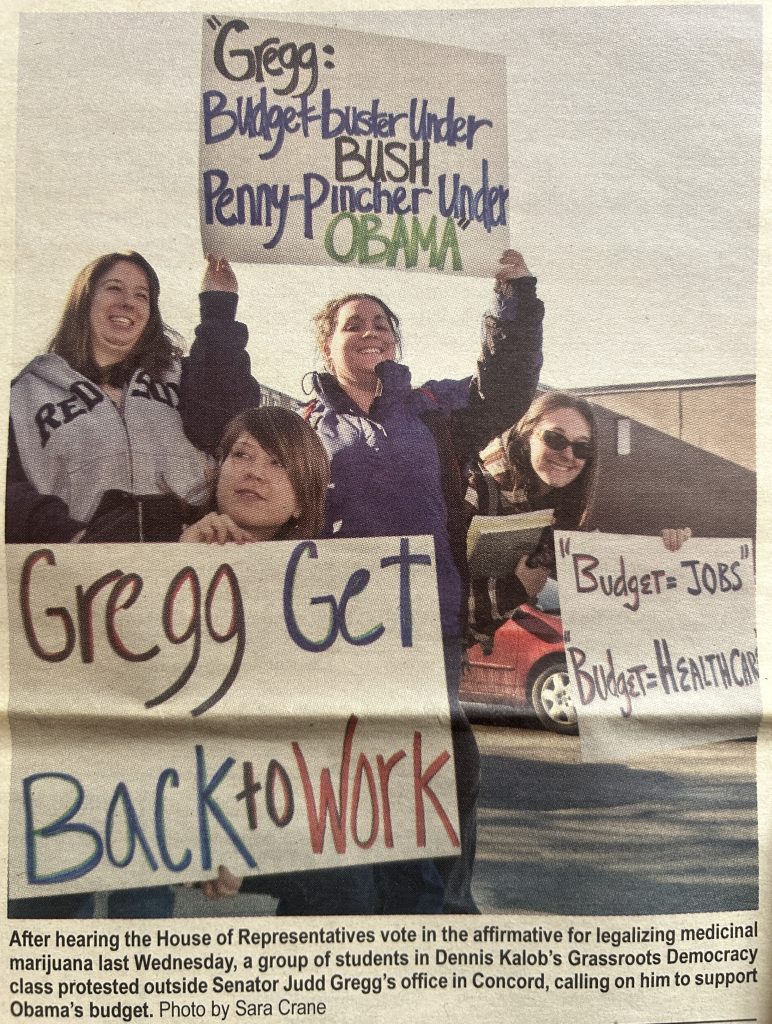
The New Hampshire House of Representatives voted on several major issues in 2009, which the NewEnglander reported on the outcomes in April.
One suggested bill would have repealed the death penalty in NH, which has not been used to execute someone since 1939. The NewEnglander mentions that the reason for the proposed bill was that a man, Michael Addison, was sentenced to death only months before. Addison was sentenced to death in 2008 after having been found guilty of murdering Michael Briggs, a Manchester police officer, in 2006.
The House voted in favor of repealing the death penalty, but it was unlikely that the bill would pass in Senate, and former Governor John Lynch made statements about vetoing the bill. The Senate, however, chose to amend the bill to create the New Hampshire Death Penalty Study Commission. In 2010, the commission found that the death penalty was “substantially more expensive than life without the possibility of parole.”
It wasn’t until April 2018 that both the House and Senate voted against the death penalty in New Hampshire. Former Governor Chris Sununu, however, vetoed the bill in the summer of 2018. This happened again in 2019; the House and Senate voted in favor of abolishing the death penalty, but when the bill was received by Governor Sununu, he vetoed the bill.
A repeal was later made by the legislature, which decided to override the governor’s veto through another vote. This repeal resulted in the decision to abolish the death penalty in New Hampshire. As the Death Penalty Information Center explains, “the repeal was not retroactive,” meaning the only man on death row, Michael Addison, remains on death row, and the repeal does not affect his established punishment.
Just last month, Michael Addison and his lawyers argued to have his sentence reduced by the New Hampshire Supreme Court. As of April 30, no decision has been made on whether to maintain the sentence for Addison or to have his sentence reduced.
There has also been a recent attempt in February of this year by Republican House members to reinstate the death penalty for murder. The bill did not pass in the House and will not move on to the Senate.
Another law proposed and voted on in the spring of 2009 was a law that would require girls under 18 to inform their parents of their intent to get an abortion.
The NH House voted against the bill in 2009, but this bill would be renewed in January 2012, when New Hampshire passed a law where “a parent or legal guardian be notified about a minor’s abortion before abortion care is provided, unless the attending abortion provider certifies that a medical emergency exists and there is insufficient time to provide such notification; alternatively, a judge can approve a minor’s petition without parental notification.”
The law, NH Rev Stat § 132:34, has been revised as recently as 2025 and states that “If such a pregnant minor elects not to allow the notification of her parent or guardian or conservator, any superior court judge shall, upon petition, or motion, and after an appropriate hearing, authorize an abortion provider to perform the abortion if said judge determines that the pregnant minor is mature and capable of giving informed consent to the proposed abortion. If said judge determines that the pregnant minor is not mature, or if the pregnant minor does not claim to be mature, the judge shall determine whether the performance of an abortion upon her without notification of her parent, guardian, or conservator would be in her best interests and shall authorize an abortion provider to perform the abortion without such notification if said judge concludes that the pregnant minor’s best interests would be served thereby.”
The NewEnglander also reported on the House voting in favor of legalizing marijuana for medical use, as well as same-sex marriage. The bill that would legalize the use of marijuana for medical purposes passed in the legislature; however, Governor Lynch vetoed the bill. In 2013, marijuana became legal for medical purposes with the support of former Governor Maggie Hassan, who signed the bill. The House bill establishing same-sex marriage passed in legislation and was signed into law by Governor Lynch in June 2009. Same-sex marriage was effectively legalized on January 1, 2010. To learn more about the attempts to legalize marijuana in NH and the history of same-sex marriage, read this NewEnglander article.
Bikes on Campus
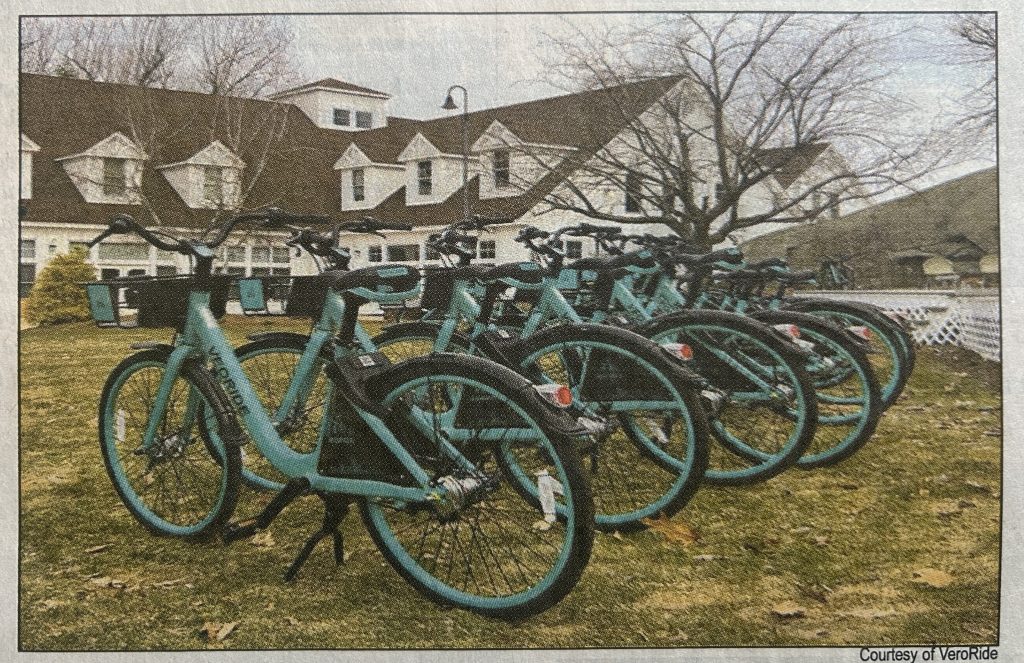
In May 2018, New England College announced a collaboration with VeoRide, a company that supplied bikes to NEC students who can ride for a small fee. A 15-minute ride only cost $0.50. Students were also able to also buy a monthly pass for $13.99 or a yearly pass for $48.99.
These bikes were introduced onto the campus through the efforts of the Environmental Action Committee (EAC) and faculty who were invested in providing students more environmentally friendly ways to travel around campus and the town of Henniker. VeoRide launched 20 bikes when the NewEnglander wrote about this new addition to the campus.
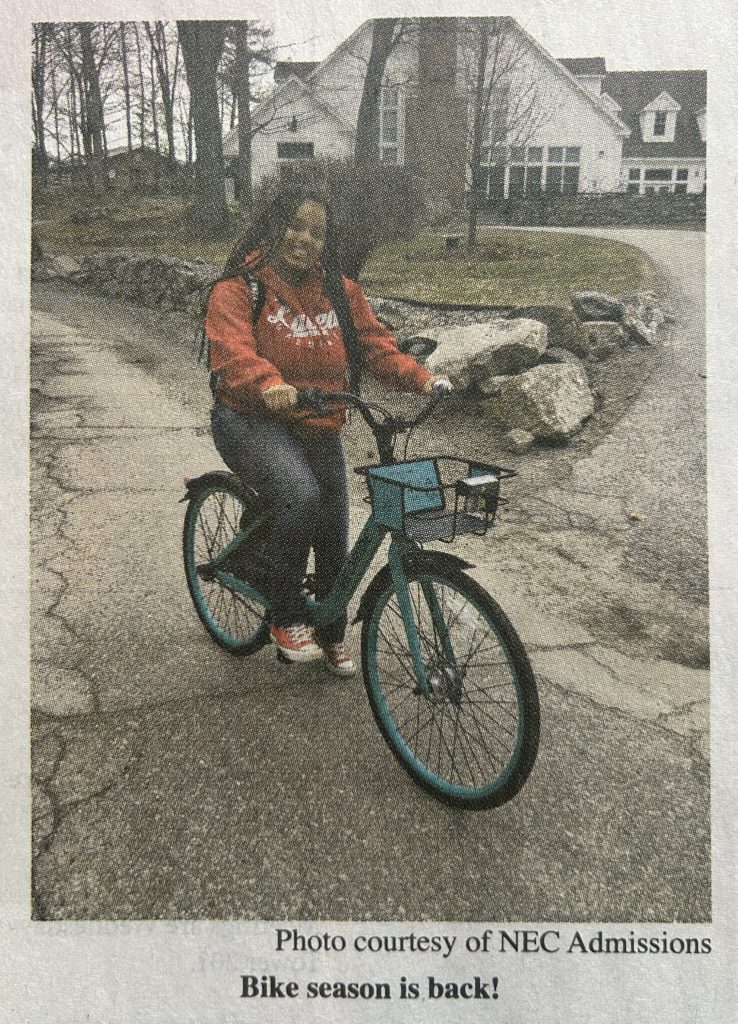
Little information has been shared regarding the absence of these bikes around campus. Some NEC faculty mentioned how at one point the bikes didn’t have much popularity among students, and they were not used by many. A faculty member also claimed that at least one of the bikes went missing; the bike allegedly fell into the Contoocook River. The NewEnglander has not been able to confirm nor disprove this claim. It seems that these bikes went away around the time of the Covid pandemic.
Bikes are not widely prevalent at NEC, whereas many college students at other colleges and universities rely heavily on bikes for transportation. For one, the lack of bikes on campus could be attributed to the fact that NEC is a small college, and also there are not many places for students to store their bikes. The number of bike racks is limited, students have to store their bikes inside their dorm rooms.
Although VeoRide is no more on campus, doesn’t mean that students shouldn’t or can’t bring bikes on campus.